Article
10 Lessons From My First Year Working at an AI Startup
I just hit my one-year anniversary at an AI native startup. It's been the most intense, rewarding, and educational year of my career.
Here are the ten lessons that had the biggest impact on how I think about building, selling, and scaling at an early-stage AI company.
1. Technical Fluency Closes Deals
Going beyond general product familiarity is the single biggest unlock for a GTM role at a technical company. Prompts, schema design, edge cases, Python snippets, model selection tradeoffs. When you're informed enough to unblock builds and increase customer confidence in real time, you become more than a salesperson. You become a trusted partner.
2. Repeatable Playbooks Are Gold Dust
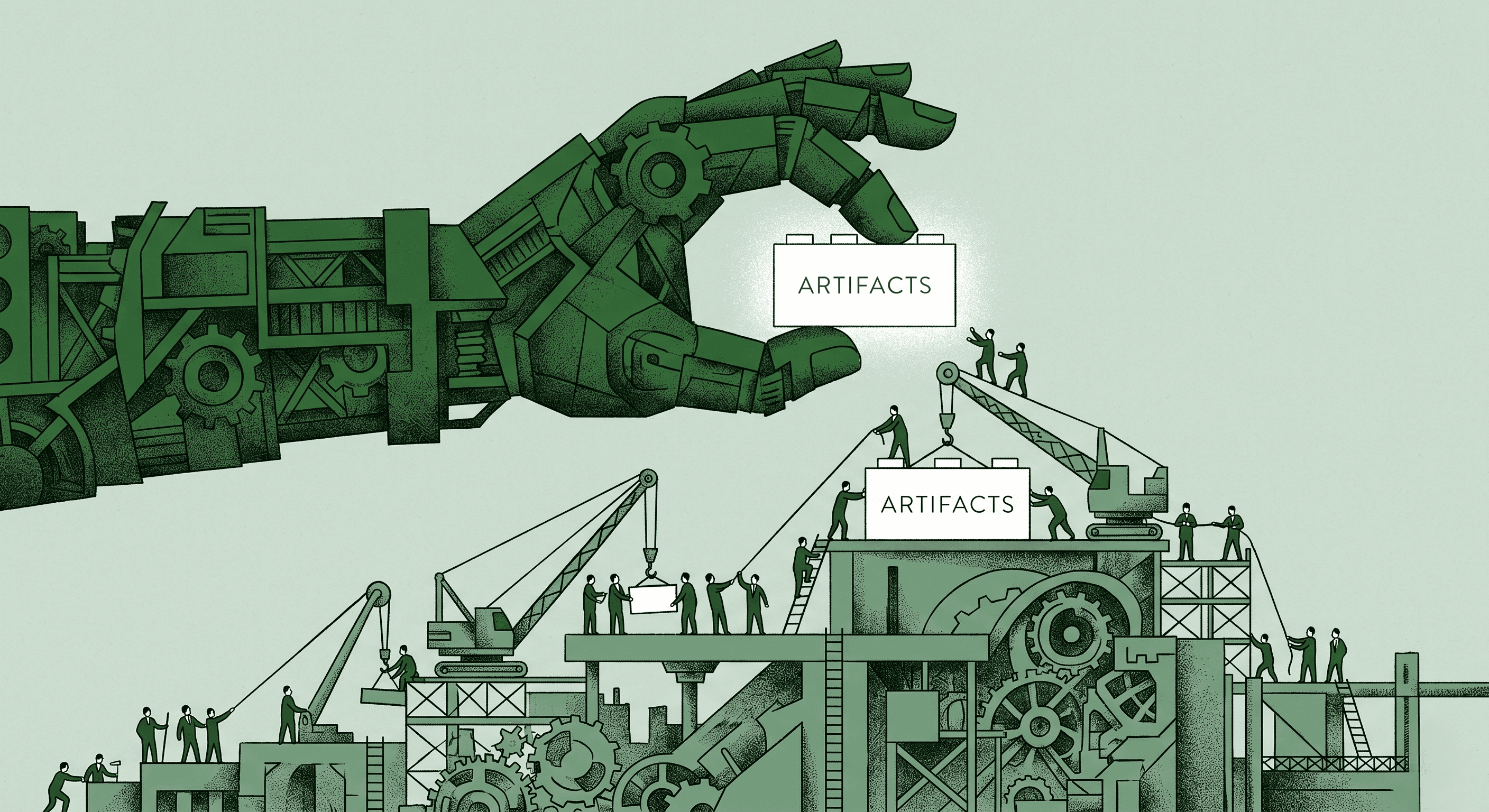
Structured onboarding approaches, renewal plans, QBR assets, discovery worksheets, demo templates, and training content. The common thread is codifying your business into scalable artifacts. In early-stage startups, the team that builds the best playbooks moves fastest when it's time to scale.
3. Renewals Are Won on Day One
Proving ROI and delivering consistent onboarding on the front end is as impactful as pricing negotiations on the back end. Quantify value early. Package outcomes clearly. Preempt objections before they form. Make the renewal decision easy from the jump rather than negotiating late when procurement has all the leverage.
4. Adoption Is a Design Problem
The system has to pull users in, not rely on them to remember steps. If your product creates friction during adoption, no amount of hand-holding will make customers want to use it. Great enablement helps, but it can't compensate for a clunky experience.
5. Cross-Functional Alignment Is Always Messier Than It Sounds
Actively shaping how Sales, Solutions, Marketing, Finance, and CX operate together is hard. In early-stage companies you're building the plane while learning how to fly it. Alignment doesn't happen by accident. It requires deliberate effort, shared systems, and constant communication.
6. Real-World Automation Is Messy
Multi-month rollups, quarterly summaries, properties that don't exist yet, special characters breaking select options, pagination quirks. The messy stuff forces you to write better specs and build stronger guardrails. Clean automation in production is always the result of dealing with ugly edge cases during development.
7. Documentation Culture Is a Growth Signal
In early-stage chaos, the teams that document their wins, losses, and processes are the ones that actually scale. Proactive sharing prevents silos and creates teams that move faster than any individual contributor. If nobody writes anything down, you'll rebuild the same things over and over.
8. Sell Outcomes, Not Features
Framing your product around ROI, time-to-value, and operational impact is always more effective than walking through feature sets. This is true even when you're talking to technical teams who genuinely care about your newest capabilities. People buy results, then care about how you got there.
9. Build Momentum With Mini Wins
Instead of waiting for a massive transformation, aim for early wins with a single workflow, a single user type, or a single team. Once the value is undeniable, expansion happens naturally. Small wins create the trust that funds bigger bets.
10. Scale Yourself With Reusable Templates
Notion hubs, lesson plans, demo blueprints, prompts, matrices, role definitions. This is how you build a GTM operating system rather than just closing your own book of business. The work you do once and share broadly is worth ten times the work you do once and keep to yourself.
Year one was about learning fast, building systems, and earning trust. Year two is about compounding everything that worked.