
Article
10 Patterns That Separate Startups That Scale From Those That Stall
I just completed my 100th Notion workspace audit. After looking inside the operational infrastructure of that many startups, the patterns become impossible to ignore.
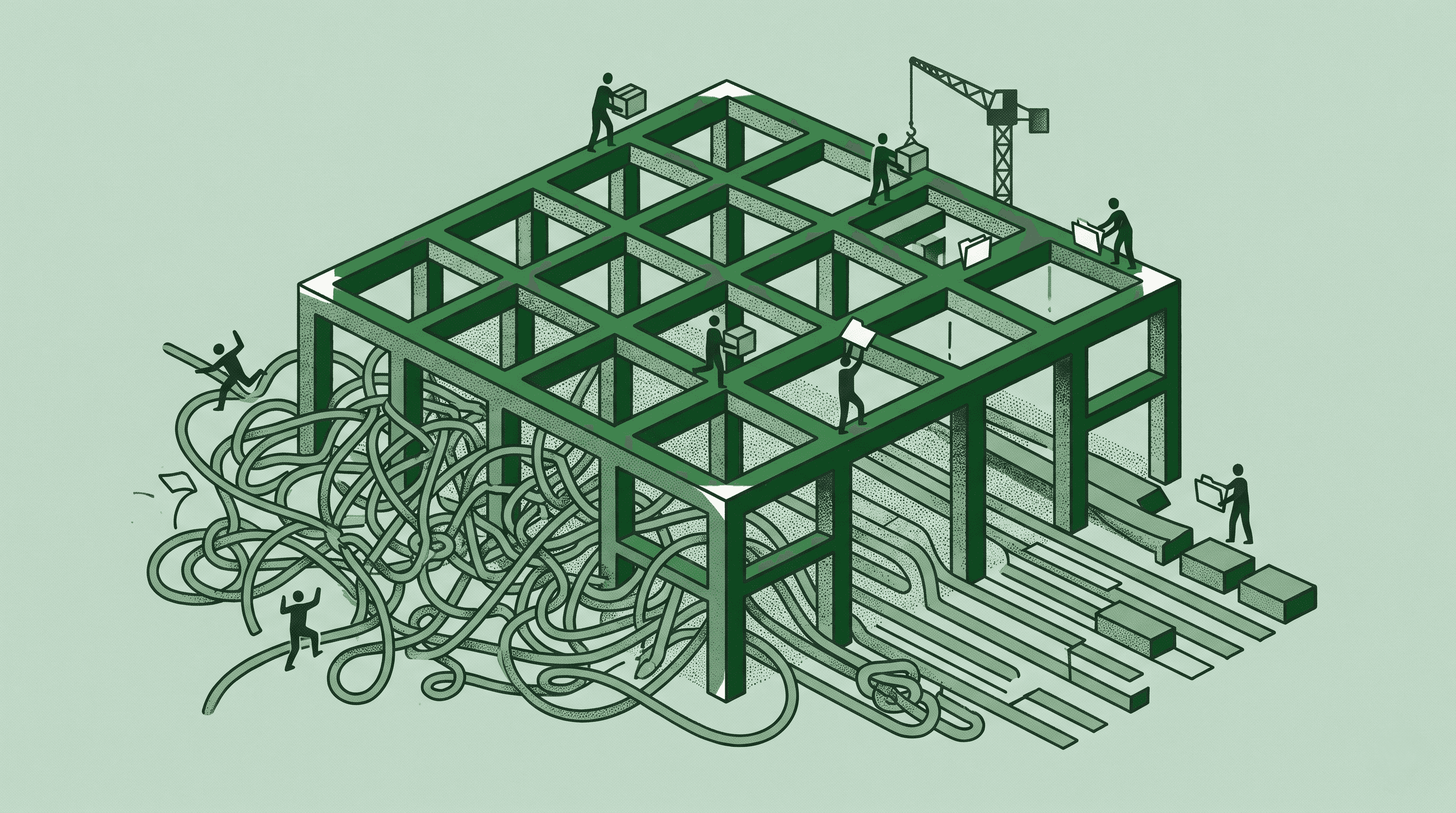
I just completed my 100th Notion workspace audit. After looking inside the operational infrastructure of that many startups, the patterns become impossible to ignore.
Some teams scale smoothly from 10 to 50 to 100 employees. Others stall out at 25 and can't figure out why. The difference is rarely about the product, the market, or the team. It's almost always about the systems underneath.
Here are the 10 patterns that show up again and again.
1. The Duct Tape Phase Lasts Too Long
Founders wait until something breaks, usually around 25 employees, to build real systems. By then the technical debt costs $25K or more to fix. The best teams start building lightweight infrastructure at 10 people, before the chaos forces their hand.
2. Tool Sprawl Is a Silent Killer
The average 15-person team has 12 or more disconnected tools. Data lives everywhere. The truth lives nowhere. Every tool that doesn't connect to the rest of your stack creates manual work for someone on your team.
3. The Bus Factor Is Always Present
Critical workflows live entirely in one person's head. If that person takes a vacation, things slow down. If that person leaves, things stop. Documenting key processes isn't glamorous, but it's the difference between a resilient organization and a fragile one.
4. Meetings Are Expensive Status Updates
Teams schedule 60-minute syncs to share information that should live on a dashboard. If you have to ask "what's the status" in a meeting, your system is broken. The information should be accessible without scheduling a call.
5. CRMs Are 60% Fiction
Without validation rules and accountability, sales reps skip fields. Pipeline data becomes a best guess rather than a financial instrument. Clean CRM data isn't a nice-to-have. It's the foundation of every revenue forecast you'll ever make.
6. Complexity Is Mistaken for Maturity
Junior operators build complex databases with dozens of properties to look sophisticated. Senior operators build simple lists that actually get used. The most mature systems are the ones people interact with daily, not the ones that look impressive in a demo.
7. Action Items Go to Die in Slack
If it's not in the task database, it doesn't exist. "I'll do that" in a Slack DM is a commitment that evaporates within hours. The teams that execute reliably are the ones that capture every action item in a system with ownership, due dates, and status tracking.
8. Onboarding Is a Leaky Bucket
It takes six weeks to onboard a new hire at most startups because knowledge is tribal. The information new people need is scattered across Slack threads, Google Docs, and the memories of people who have been around the longest. Systematized startups do the same onboarding in five days.
9. Automation Is Under-Leveraged
Most teams are still manually copying data between tools. If you do something more than three times a week, a robot should do it for you. The barrier to automation has never been lower, but most teams still haven't taken the first step.
10. AI Is Treated as a Toy Instead of a Teammate
The best teams are already using AI agents to enrich leads, summarize meetings, draft account plans, and flag stale pipeline. The rest are still writing every email from scratch and manually formatting every report.
The Big Takeaway
You don't need to be perfect. You just need to be slightly more organized than your chaos.
Every one of these patterns is fixable. Most of them are fixable quickly and cheaply if you catch them early enough. The startups that scale are the ones that recognize these patterns before they become crises and take small, deliberate steps to address them.