Case Study
Engineering Growth for 61% Faster Sales Cycles
The Client: An Advertising Technology Company (AI-powered DSP and online media) is a pioneer in advertising on emerging screens (VR, AR, and vehicle consoles). They faced a common problem: their product was futuristic, but their Go-To-Market (GTM) operations were anchored in legacy, manual workflows.
Intro
Startups often believe that growth comes purely from product innovation or aggressive sales tactics. However, without a scalable operating system, increased volume only breaks the business faster.
The Client: An Advertising Technology Company (AI-powered DSP and online media) is a pioneer in advertising on emerging screens (VR, AR, and vehicle consoles). They faced a common problem: their product was futuristic, but their Go-To-Market (GTM) operations were anchored in legacy, manual workflows.
The Intervention: Fortuna deployed a "Startup Systems Engineering" overhaul. Not just a consulting audit, but a complete re-architecture of their GTM stack. We moved them from a fragmented toolset to a unified "GTM Operating System."
The Impact:
By engineering their systems for velocity and clarity rather than just buying more SaaS tools, the company achieved:
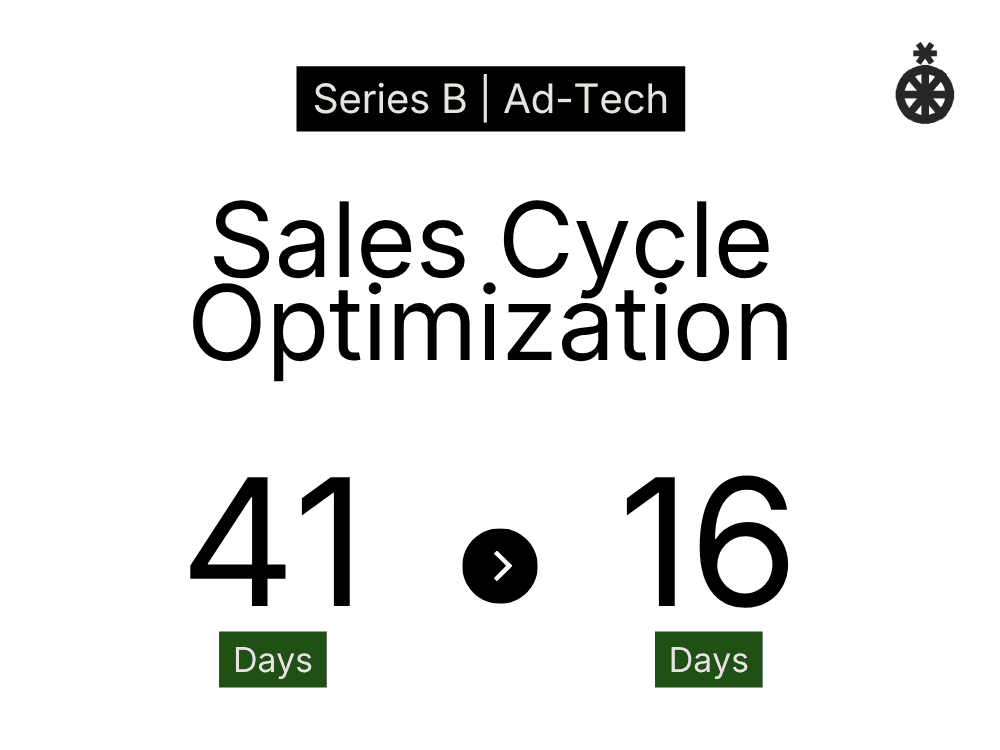
61% Reduction in Sales Cycle: From 41 days down to 16 days (first engagement to signed contract).
56% Faster Time-to-Value: Client onboarding and go-live reduced from 34 days to 15 days.
$32,000 Annual Savings: Reduced tool spread from 12 distinct platforms to just 3, saving ~$2,600/month in overhead.
The Challenge: Innovation Drag and Tool Sprawl
The company operates at the bleeding edge of AdTech. Their mission is to connect brands to "screens of the future." But internally, the team was battling "systems of the past."
The "Content Chaos" Problem
To sell complex, futuristic products like VR ads or programmatic audio, you need high-fidelity thought leadership. The team needed to produce content across diverse clusters—Programmatic Solutions, Publisher Growth, and Consumer Experience.
The Reality: There was no central engine. Ideas lived in Slack, drafts in Google Docs, and assets in email.
The Result: Inconsistent market presence and high burnout risk for subject matter experts who had to "reinvent the wheel" for every post or white paper.
The "Tool Bloat" Tax
In an attempt to solve these friction points, the team had acquired a stack of 12 different tools for project management, CRM, asset hosting, and collaboration.
The Reality: "Tool spread" created data silos. Information didn't flow; it stagnated. A sales rep couldn't easily find the marketing asset needed to close a deal because it was locked in a tool they rarely used.
The Cost: Beyond the friction, this stack was costing the company significant monthly recurring revenue (MRR) in unused or redundant licenses—approximately $3,500 per month.
The Sales Velocity Anchor
With manual workflows and scattered assets, deal readiness suffered.
The Metric: The average sales cycle dragged out to 64 days.
The Bottleneck: Preparing for a high-stakes partnership discussion (e.g., with major enterprise partners) required days of manual asset gathering, deck assembly, and internal alignment.
The Solution: Startup Systems Engineering
We didn't just clean up their Notion workspace; we engineered a GTM Operating System. This approach treats the company's operations as a product that can be designed, built, and optimized.
Phase 1: Radical Consolidation (The "Golden Stack")
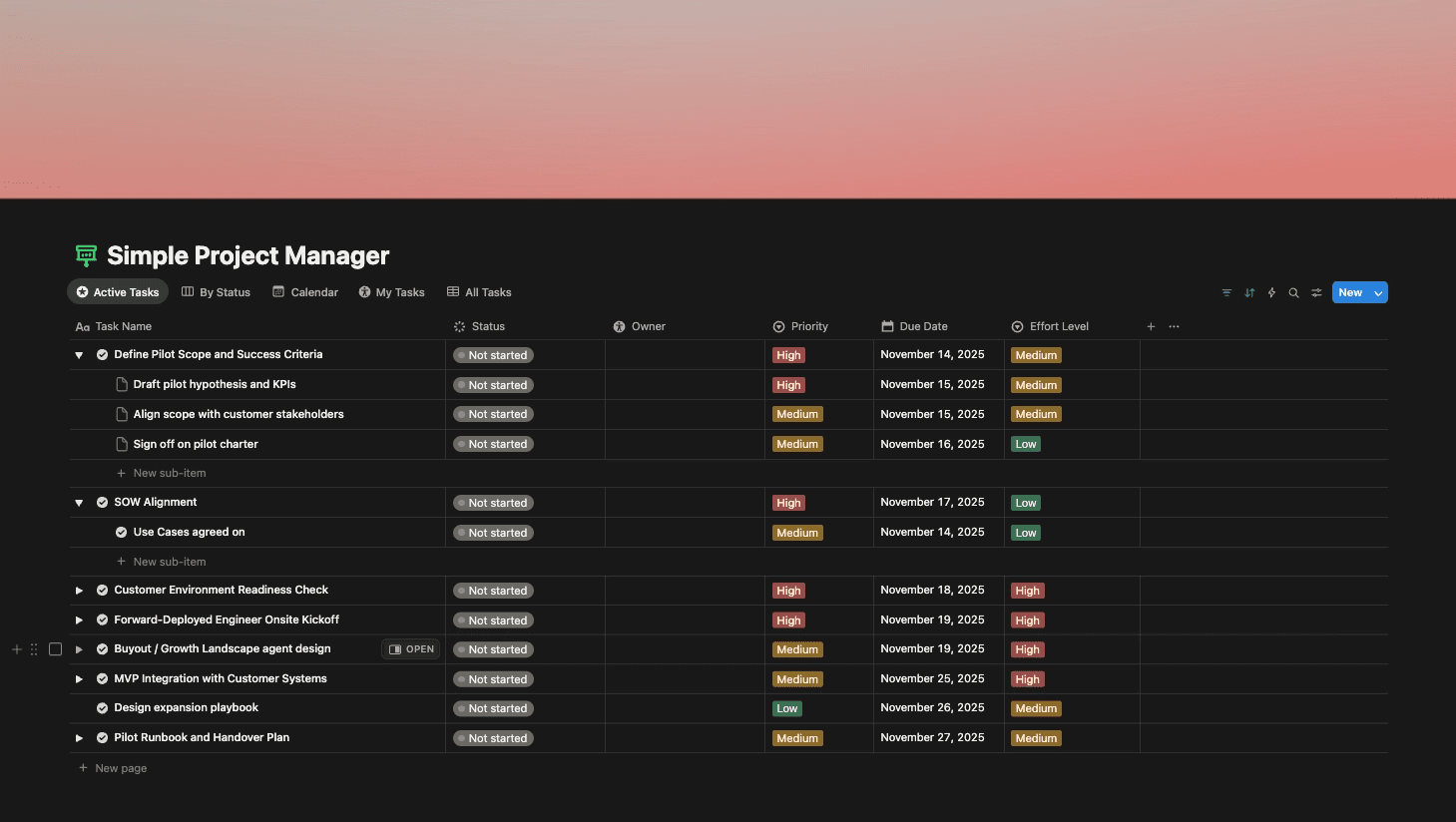
We conducted a ruthless audit of the 12-tool stack.
The Move: We consolidated workflows into a core triad of integrated tools (Notion, Slack, and n8n), eliminating 9 redundant platforms.
The Orchestration: We leveraged n8n as the "central nervous system" to automate handoffs between Sales and Customer Success, ensuring zero data loss without manual entry.
The Logic: Complexity is the enemy of execution. By forcing convergence, we ensured that "where work happens" and "where knowledge lives" were the same place.
Phase 2: The Content Engine
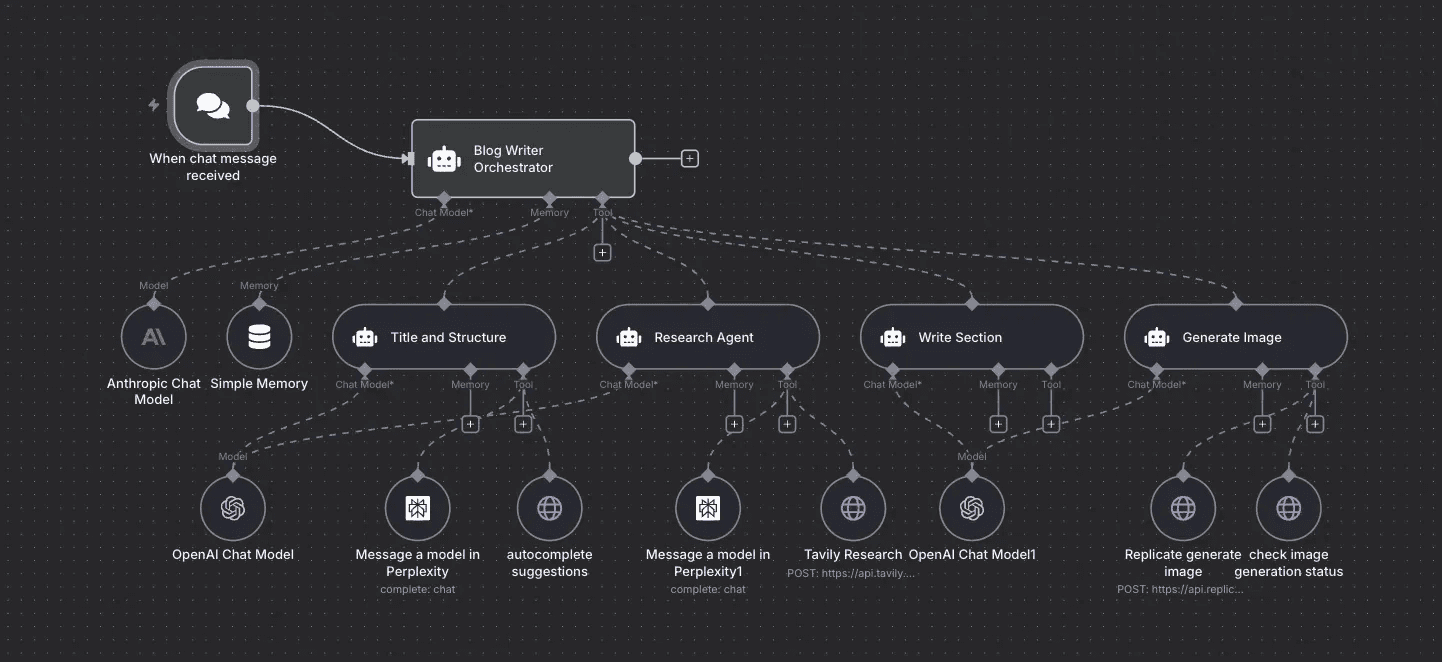
We built a structured Content Pillars Database to automate the intellectual property supply chain.
Ideation: We used n8n to automate topic generation based on key clusters (e.g., "Pioneering Advertising on Emerging Screens").
Production: A kanban-style production pipeline that moves ideas from "Raw Insight" to "Published Asset" without friction.
Outcome: This turned random acts of marketing into a predictable, scalable publishing cadence.
Phase 3: Strategic Asset Centralization
We created a "Single Source of Truth" for high-stakes narratives.
The Asset: A modular Master Deck for investment and partnerships.
The Structure: Consolidated mission, market landscape, and future vision into "blocks" that could be remixed for specific deals without starting from scratch.
The Result: Sales reps could pull a "partner-ready" narrative in minutes, not days.
Phase 4: The Client Portal
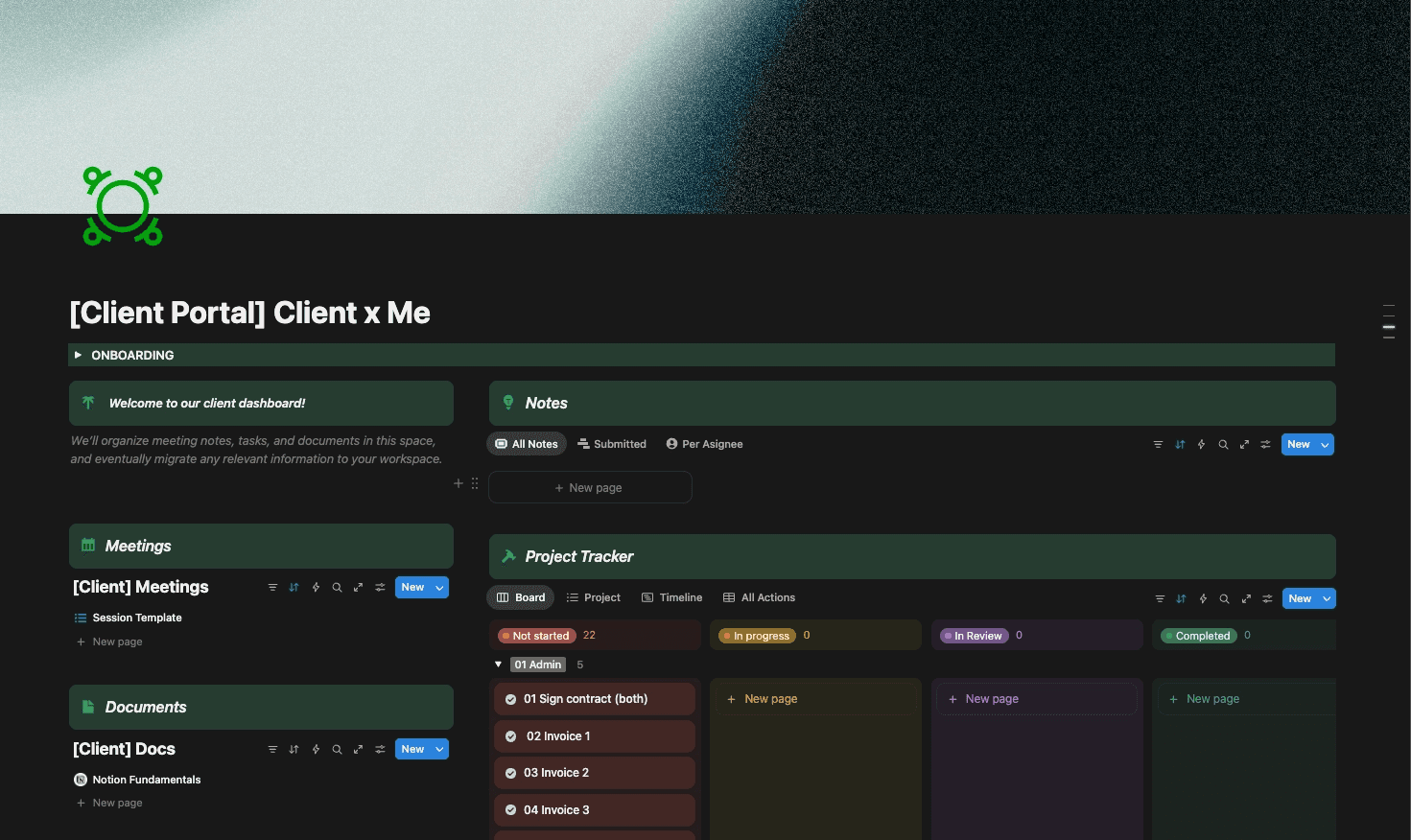
To fix the onboarding lag, we deployed a standardized Client Portal.
The Shift: Instead of email threads and loose files, every new client received a dedicated, branded portal.
The Function: This portal centralized lead intake, project tracking, and asset delivery. It gave clients transparency and reduced the "admin tennis" of onboarding.
The Results: Quantifying the Systems Engineering Advantage
The true measure of a System Engineer's work isn't how "clean" the workspace looks—it's how fast the business moves.
Cost Reduction
Metric: Tool spread reduced from 12 to 3.
Outcome: $2,600/month savings ($32k/year).
Impact: Capital was freed up to be reinvested in ad spend and product development rather than administrative overhead.
Sales Acceleration
Metric: Sales cycle reduced from 41 days to 16 days.
Outcome: Deals close 61% faster.
Impact: This velocity increase effectively doubles the sales capacity of the existing team without adding headcount. By having the "Golden List" of assets ready and accessible, the team could strike while prospect intent was high.
Onboarding Velocity
Metric: Time-to-Live reduced from 34 days to 15 days.
Outcome: Clients see value 56% sooner.
Impact: Faster time-to-value directly correlates with higher Net Revenue Retention (NRR) and customer satisfaction (CSAT). The "First 30 Days" are critical for churn prevention; halving the setup time is a massive win for LTV.
Conclusion: Don't Manage Chaos, Engineer It Out
This company's journey proves that Startup Systems Engineering is a competitive advantage.
They didn't need more salespeople to close faster; they needed a system that removed friction from the sales process.
They didn't need more tools to manage projects; they needed a system that consolidated truth.
In the race to define the future of advertising, the winner isn't just the one with the best AI—it's the one that can execute the fastest. By adopting a Startup OS, the company has ensured that their operations are as futuristic as their product.
Ready to Automate Your Workflows?
Is your team struggling with similar challenges? Are you looking to streamline your processes, reduce costs, and boost productivity?
When you’re ready, I can help you:
I’m Mike - a systems builder and startup expert.
I help early stage startups manage and optimize their operations with simple, scalable systems - built using tools like Notion, Slack, and n8n.