
Case Study
How A Freelancer Marketplace Replaced Three Back-End Systems with One Automated Source of Truth
Our client, a Series B freelancer marketplace, hit a tipping point: their vendor network was exploding from hundreds to thousands of professionals, but their internal onboarding systems were stuck in a manual, fragmented past.
Intro
As marketplaces scale, the friction between supply and demand often shifts from finding customers to managing the workforce that services them.
Our client, a Series B freelancer marketplace, hit a tipping point: their vendor network was exploding from hundreds to thousands of professionals, but their internal onboarding systems were stuck in a manual, fragmented past.
By partnering with Fortuna, the client moved from three disconnected back-end systems to a single, automated "Source of Truth" built on Attio and powered by n8n.
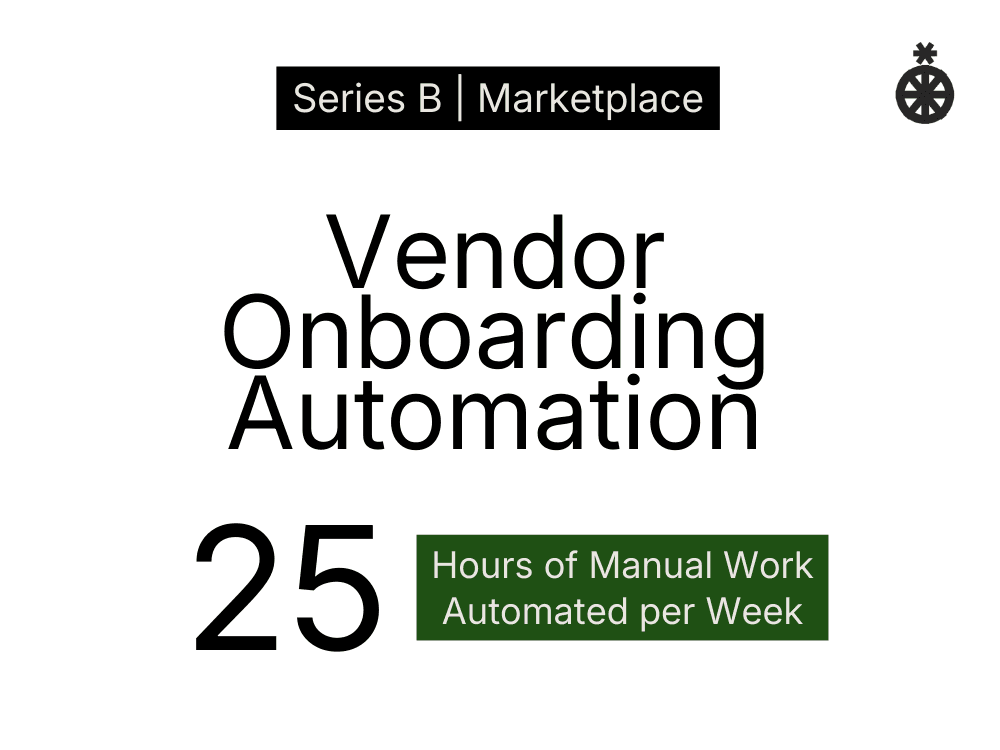
The results were immediate: a $5,000 annual reduction in licensing fees, 25 hours of manual work saved every week, and a system ready to handle 10x growth without adding additional headcount.
Introduction: The Price of Rapid Growth
In the world of early-stage startups, growth is the ultimate metric.
But for our client, growth brought a unique set of operational hurdles. As a platform similar to Upwork, they connect high-level professionals (like Notion consultants and digital marketers) with companies needing specialized services.
The company had successfully navigated four funding rounds and was scaling its operations with a lean team of fewer than 50 employees. However, they were experiencing the "Scaling Paradox": their market success was rapidly outstripping their internal infrastructure's ability to keep up.
While the number of service providers on the platform was skyrocketing into the thousands, the internal team was still relying on manual processes to interview, vet, and manage those vendors.
"The old way" of working—manual data entry and juggling multiple spreadsheets—was no longer just an inconvenience; it was a liability that threatened the quality of their onboarding and the speed of their project delivery.
The 3 Core Challenges: The "Pain" of Inefficiency
1. System Fragmentation (The "Three-Headed Monster")
The client was attempting to track vendor onboarding and project progress across three different back-end systems. This fragmentation led to massive data silos.
The Symptom: Team members had to jump between tabs to find the status of a single vendor.
The Risk: Information "leakage." When data lives in three places, it effectively lives in none. This fragmentation caused delays in payments and updates, directly impacting the trust vendors placed in the platform.
2. The Onboarding Bottleneck
Managing a few hundred vendors is a manual task; managing thousands is a systems problem. Their partner team was struggling to keep up with the volume of professionals entering their program.
The Symptom: Partner managers were spending three to five hours per week on manual data logging and "status checking".
The Risk: A degraded vendor experience. If a high-quality consultant feels the onboarding process is chaotic, they are less likely to bid on jobs or remain active on the platform.
3. Communication Failure at Scale
As the volume of providers grew, the ability to provide consistent updates on platform changes and project milestones became impossible through manual outreach.
The Symptom: Inconsistent follow-ups and missed communications regarding project timelines and payment statuses.
The Risk: Operational stagnation. Without automated touchpoints, the partner team became a bottleneck for the entire business, slowing down the very growth they were hired to facilitate.
The Strategic Solution: A Three-Pronged Approach
The heart of the engagement was about simplification through integration. We didn't just want to add another tool; we wanted to consolidate the environment into a high-performance engine.
The Audit: Uncovering the Hidden Leaks
The first step was a deep-dive audit of their current onboarding funnel. We mapped every touchpoint, from the moment a new service provider filled out a form on the website to the point they completed their first project.
During this audit, we identified "leaks" in the data flow where information from frontline systems wasn't making it to the decision-makers. We focused on the input, analysis, and output stages. By understanding the lifecycle of a vendor, we could see exactly where manual intervention was slowing down the time-to-value for both the client and its partners.
The Architecture: Attio + n8n
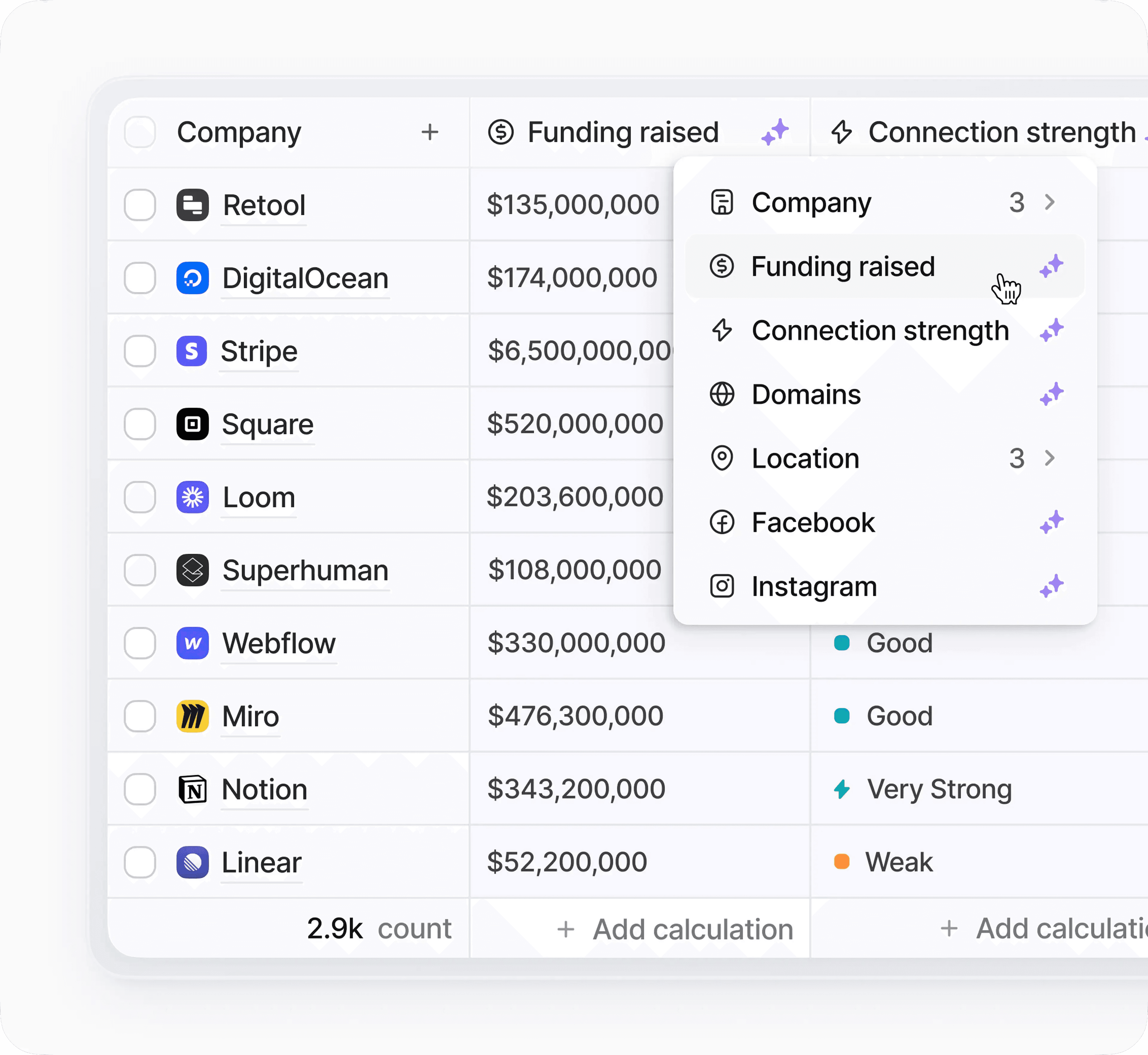
We chose Attio as the central CRM for this integration. Unlike "bulky" legacy systems like HubSpot, Attio offered a lean, API-first architecture that was perfectly suited for a partner-facing CRM.
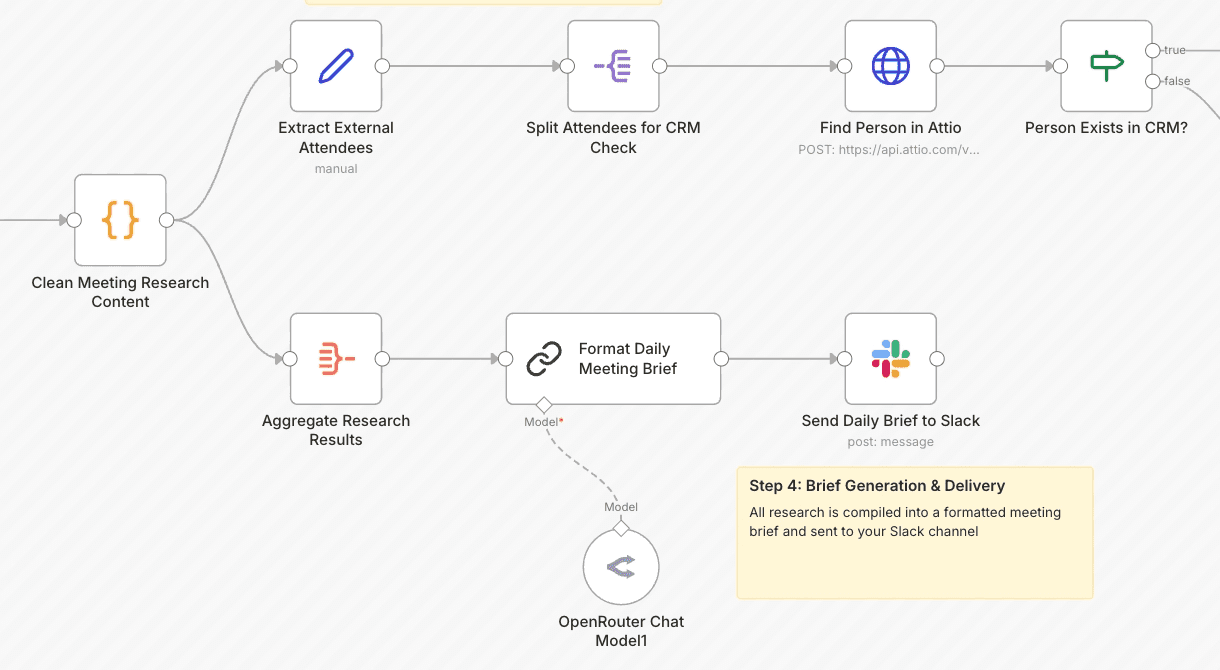
The "Logic" of the new system was built on a series of n8n automations:
Data Ingestion: We set up webhooks to capture information from website forms automatically.
Single Source of Truth: We mapped custom objects in Attio—Contacts, Companies, and Projects—and linked them to external inputs like project trackers and Gong recordings.
Programmatic Flow: Information now flows programmatically. When a vendor completes a vetting step, the CRM updates in real-time without a human ever touching a keyboard.
The Implementation: "Done-With-You" Success
Implementation was a collaborative, eight-hour intensive delivered within a single week. We didn't just build the system in a vacuum; we worked hand-in-hand with their team in a "done-with-you" scenario.
Training: We taught the partner team how to manage and iterate on their Attio workspace.
Dashboards: We built custom system dashboards that allowed managers to track the progress of every vendor in the onboarding flow, and the status of every ongoing vendor project at a glance.
Automated Outreach: We set up internal automations within Attio to send status emails directly to vendors, ensuring they were always informed of their onboarding or project status.
The Value Realized: Results & Outcomes
Quantitative Wins
Cost Savings: By sunsetting redundant back-end tools, the client saved $4,000–$5,000 per year in licensing costs.
Time Recovery: The partner team saved 15 total hours per week (5 hours per manager).
Labor Efficiency: At an average manager salary of $75/hr, this represents over $58,000 in annual labor value reclaimed for high-impact work.
Speed: The entire project was delivered for less than $1,000 and went live in one week.
Qualitative Wins: "Peace of Mind"
The most significant shift was in team morale and reliability. They moved from a reactive state where they were scrambling to find data across three systems, to a proactive one. Partner managers now have a clear view of their entire "book of business," allowing them to focus on generating additional partner business rather than manual adjustments and data logging.
Future-Proofing
This system was built to scale. They successfully transitioned from managing hundreds to thousands of vendors without any system downtime or loss of quality in their onboarding process. The architecture is now ready to support the next 10x growth spurt as they continue to dominate the freelance marketplace space.
Conclusion: The Roadmap for Your Business
Scaling a startup is inherently messy, but your systems don't have to be. The transition the client made—from fragmented, manual chaos to a centralized, automated engine—is available to any organization willing to audit their current friction points.
Imagine a world where your team isn't losing 15 hours a week to "work about work." Imagine having a single dashboard that tells you exactly where every project stands. That is the power of a simple, scalable, and connected system.
**Ready to optimize your workspace?**If your team is struggling with similar challenges, let's build a roadmap to your own automated headquarters.
Ready to Automate Your Workflows?
Is your team struggling with similar challenges? Are you looking to streamline your processes, reduce costs, and boost productivity?
When you’re ready, I can help you:
I’m Mike - a systems builder and startup expert.
I help early stage startups manage and optimize their operations with simple, scalable systems - built using tools like Notion, Slack, and n8n.