Case Study
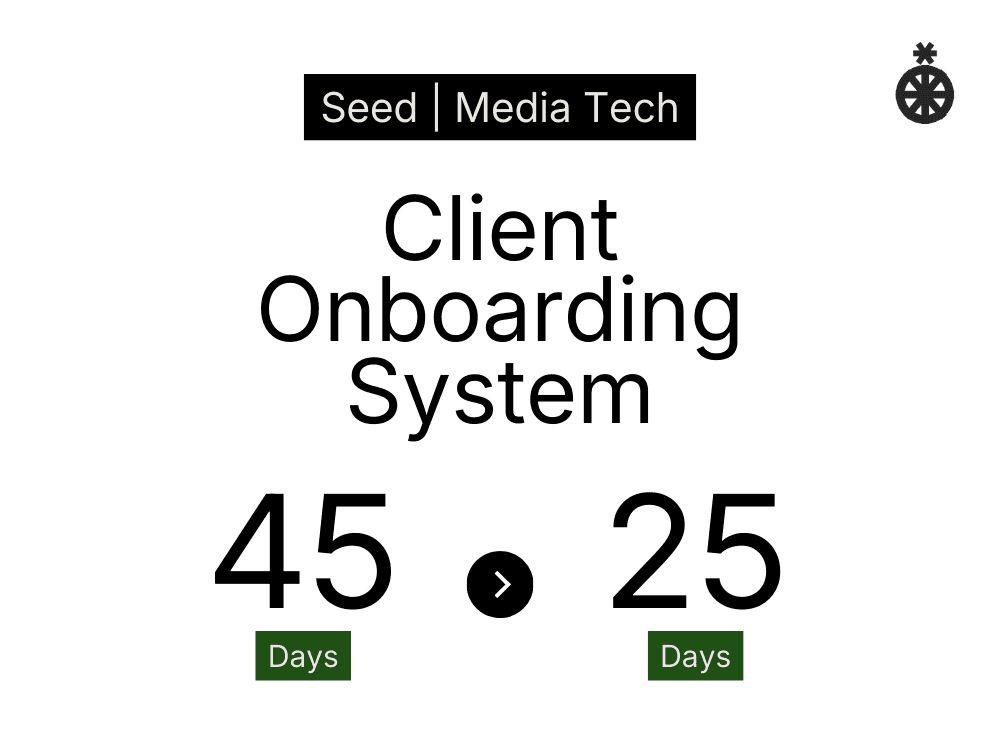
How a Media Agency Reduced Onboarding Time by 45% with a Unified Agency OS
This white paper details how a Media Agency (doing ~$75k/mo in billings across 15+ clients) overcame this trap not by hiring more managers, but by implementing a centralized Agency Operating System.
Intro
Scaling a service-based business is widely considered one of the hardest operational challenges in the startup world. As headcount grows, margins typically compress, and quality often dips.
A phenomenon known as the "Agency Trap."
By migrating from a fragmented stack of Monday.com and disconnected tools to a unified Notion-based architecture, the agency achieved a 45% reduction in client onboarding time, established a consistent "white-glove" client experience, and removed the existential risk of institutional knowledge loss (the "Bus Factor").
The Agency Trap: Why Scaling Equals Breaking
Every successful agency eventually hits a ceiling. In the early days, the founders manage everything. Quality is high because the founders are high-performing individuals. But as the client roster grows, the founders can no longer be in every meeting. They hire account managers, who hire coordinators, who hire assistants.
Suddenly, the "Way of Working" fragments.
Client A gets a beautifully formatted weekly report because Account Manager A loves design.
Client B gets a messy email bullet list because Account Manager B is rushing.
Client C falls through the cracks entirely because their onboarding checklist lived in a spreadsheet that nobody updated.
This was the reality facing the agency. They were successful and growing, but their internal infrastructure was creaking under the weight of that growth.
The "Before" State: Fragmentation and Fragility
The agency’s operations were defined by tool fragmentation.
Project Management: Lived in Monday.com, but the structure varied from board to board.
CRM: Customer data was scattered across disparate tools in Google Sheets, Monday.com, and a forgotten instance of Hubspot, with no single "source of truth" for where a client stood in their lifecycle.
Knowledge: Institutional knowledge was trapped in the heads of key employees.
The most dangerous symptom of this fragmentation was the "Bus Factor." When a lead account manager left the business, their unique way of organizing client data left with them. There were no documented Standard Operating Procedures (SOPs) or centralized wiki to bridge the gap. The agency was vulnerable.
The onboarding process was manual and reactive. Recreating the same project structures for every new client consumed hours of valuable time.
Time that could have been spent on strategy and execution.
The Solution: Systems Engineering
The agency didn't just need a "cleanup"; they needed a new operating system. Partnering with Fortuna, they adopted a Systems Engineering approach. We didn't just organize their tasks; we re-architected their data model.
Phase 1: The Unified Truth Architecture
The first step was to reject the idea of "specialized tools for everything" and embrace a Single Source of Truth in Notion.
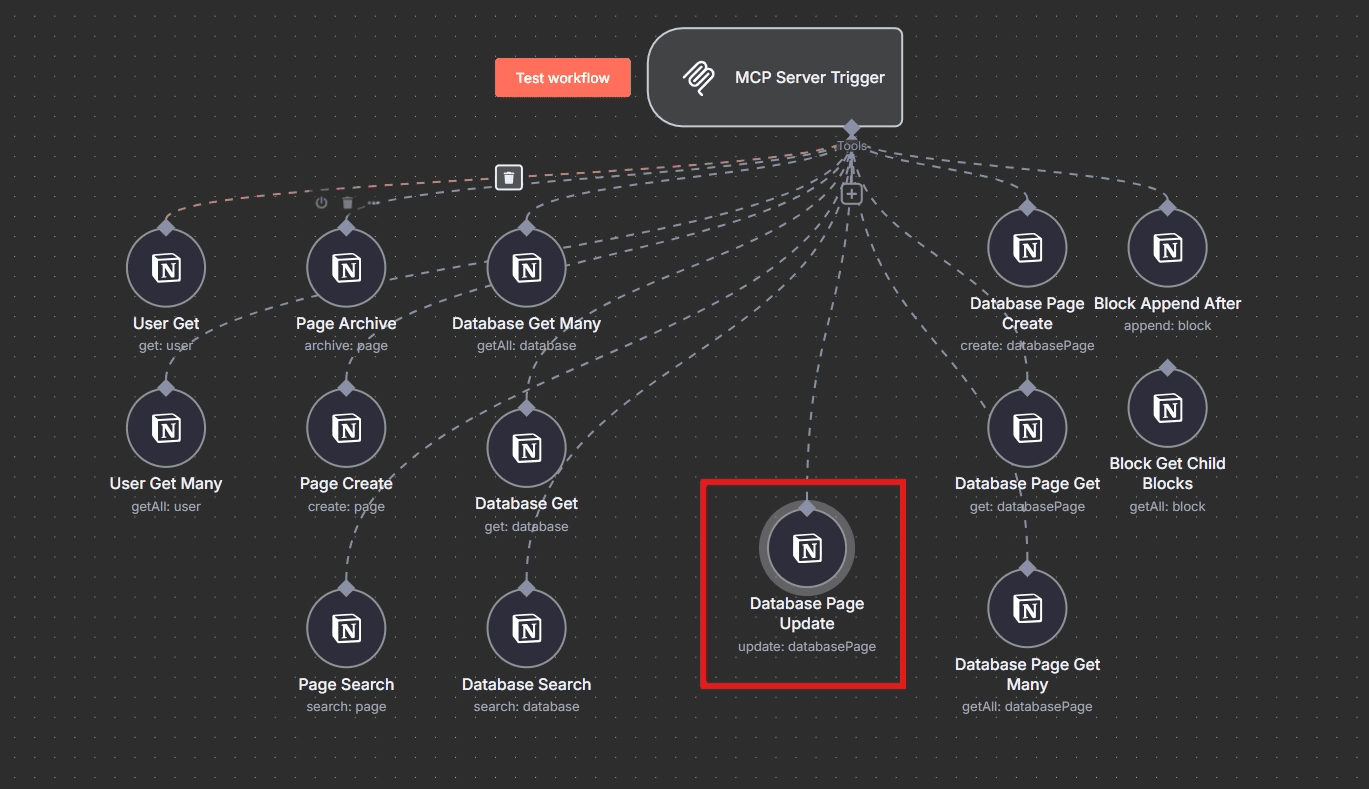
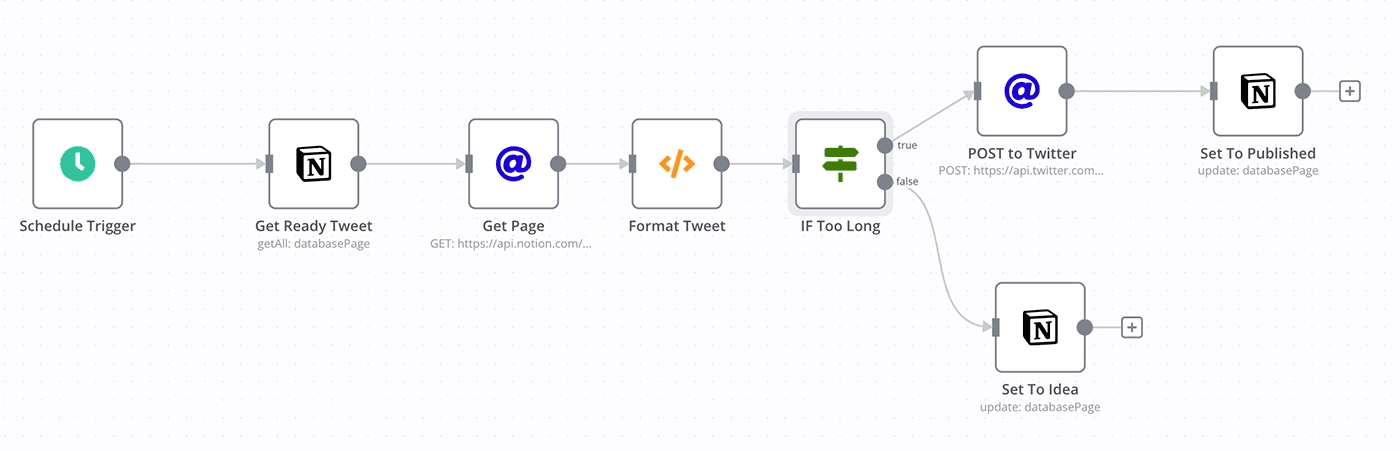
We migrated all project management from Monday.com to Notion, but we didn't just stop with copying over the data. We engineered a relational database structure, orchestrated by n8n.
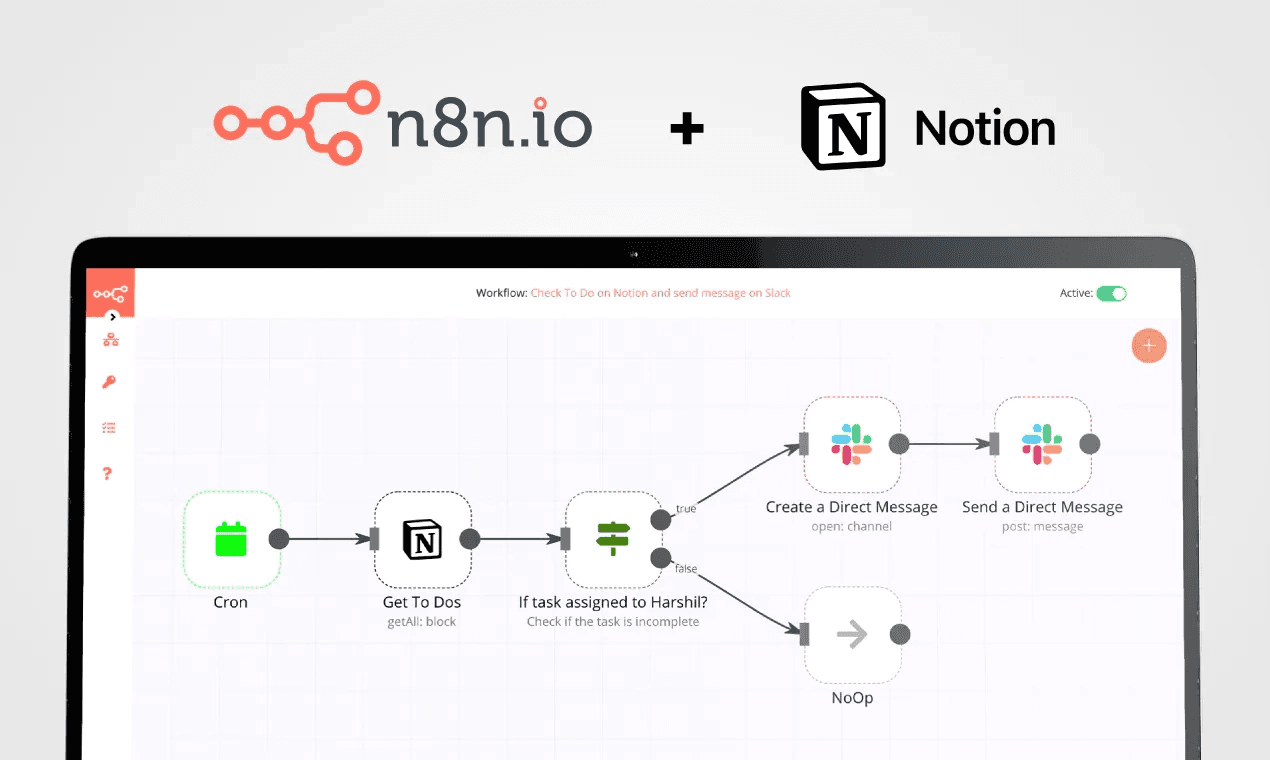
We leveraged n8n as the central nervous system to connect disparate tools:
Workflow Orchestration: n8n acted as the middleware, syncing data bi-directionally between Slack, Gmail, and Notion to ensure the database remained the live Single Source of Truth.
Automated Handoffs: We automated the "boring stuff." Status updates in Notion automatically triggered notifications and moved projects to the next stage, removing manual friction.
Projects were linked to Clients.
Tasks were linked to Projects.
Meeting Notes were linked to both.
This meant that if a CEO wanted to know "What’s happening with Client X?", they didn't have to slack an account manager. They simply opened the Client Page and saw every active project, overdue task, and recent meeting note in a single dashboard.
Phase 2: Automated Client Portals
Transparency is the ultimate trust-builder in agency relationships, but manual reporting is a low-leverage activity.
We built Standardized Client Portals that acted as a window into the agency's internal work.
Internal View: The team works in their robust internal database with messy drafts, internal chats, and backend tasks.
External View: The Client Portal automatically pulls only the "Client-Facing" tasks and deliverables from that same database.
This "Write Once, Publish Everywhere" architecture meant the team didn't have to spend Friday afternoons "building reports." The work was the report.
Phase 3: The Culture of Documentation
To solve the "Bus Factor," we operationalized knowledge management. We built a library of Standard Operating Procedures (SOPs) directly into the workflow.
We didn’t sit with each employee for hours on end and meticulously document their workflows over their shoulder. Instead we had each team draft up a hit list of the processes and workflows they do in their day to day jobs.
From here we would ask that the employees record themselves the next time they would be completing that task.
Then whenever an employ would go to work on that task in the next couple of weeks, they would double check the list, and if it wasn’t already, they would record the process.
We then used AI to transform those recordings into actionable SOPs.
When an employee opens a task called "Launch Ad Campaign," the SOP for how to launch that campaign is embedded inside the template. Documentation moved from being a "dusty binder on a shelf" to an active tool used in daily work.
The Results: Scaling Without Breaking
The transformation produced immediate, measurable results for the agency.
45% Reduction in Onboarding Time
By templating the entire onboarding lifecycle, the agency slashed the time it took to bring a new client from "Contract Signed" to "First Value Delivered" by 45%.
Old Way: Manually creating folders, setting up boards, drafting welcome emails.
New Way: One click generates the entire Client OS, complete with portals, project timelines, and welcome assets.
$10K+ Cost Savings & Consolidation
By consolidating Monday.com, separate CRMs, and documentation tools into a single Notion workspace, the agency realized $10K+ in annual cost savings on tools and licenses. They stopped paying for features they didn't need and started getting maximum leverage from the tool they lived in.
Institutional Resilience
The agency is no longer fragile. If a key team member leaves, their knowledge remains. The SOPs are in the system, the client history is in the database, and the workflows are automated. The business is now an asset that exists independently of the founders' memory.
Conclusion: You Need an Operating System, Not Just Tools
The lesson from this agency is clear: Tools do not solve operational problems; Systems do.
Buying Monday.com, Asana, or Salesforce will not fix a broken process. It will simply magnify the chaos. To scale a modern startup or agency, you must adopt an engineering mindset. You must build a system where:
Truth is Unified: Data lives in one place, not ten.
Work is Visible: Progress is tracked automatically, not reported manually.
Knowledge is Durable: Processes are documented and embedded in the work.
At Fortuna, we call this Startup Systems Engineering. We don't just organize your Notion; we engineer your business for scale.
"Before Fortuna, we were trapped in a cycle of reinventing the wheel with every new client—now we have a system that scales our quality, not our chaos."— Paulina T., Founder
Ready to Automate Your Workflows?
Is your team struggling with similar challenges? Are you looking to streamline your processes, reduce costs, and boost productivity?
When you’re ready, I can help you:
I’m Mike - a systems builder and startup expert.
I help early stage startups manage and optimize their operations with simple, scalable systems - built using tools like Notion, Slack, and n8n.