
Article
The FLOWS Framework for Building High-Performing Notion Workspaces
People have a misconception about what makes a Notion workspace "good."
Good workspaces don't need thousands of automations or complex webs of database relations. Good workspaces are the ones your team actually uses. You use them because they help you do your job better.
People have a misconception about what makes a Notion workspace "good."
Good workspaces don't need thousands of automations or complex webs of database relations. Good workspaces are the ones your team actually uses. You use them because they help you do your job better.
I use Notion every day in my role at V7. I used it every day at Pigment before that. I use it every day running Fortuna. And the workspaces that actually get used across all of these tend to be built on roughly the same principles.
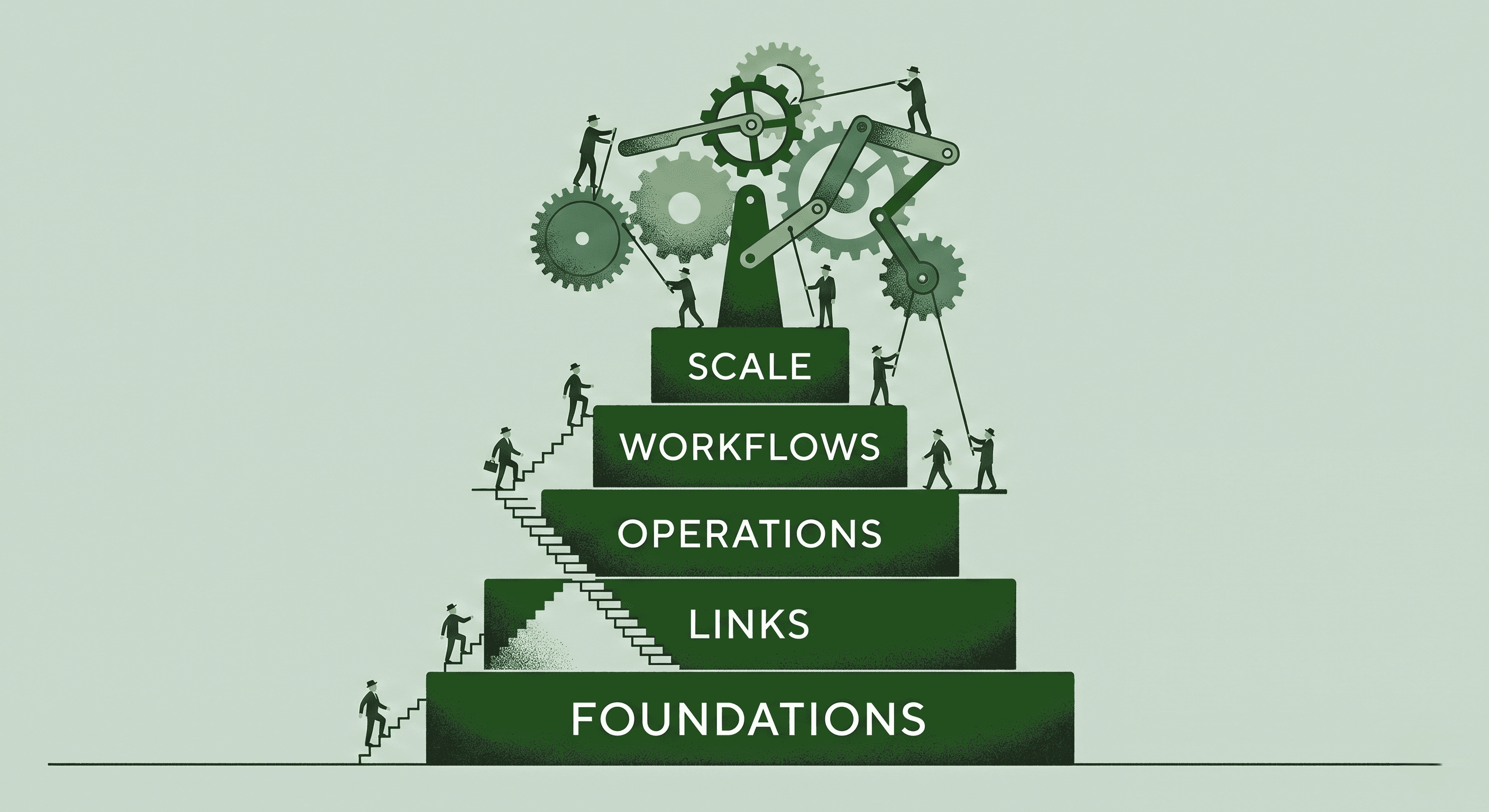
That's why I developed the FLOWS framework. It's a simple mental model that helps you create a high-performing workspace from the ground up. Think of it as a roadmap to designing something effective that you can iterate on over time.
What FLOWS Stands For
Foundations. Build a solid base for growth. Focus on creating only the essential structures within Notion. Your must-have databases like Projects, Tasks, Docs, and Meetings. Document your current processes. Organize all your information. Create a single source of truth for your business. This part is critical. Everything else builds on top of it.
Links. Connection is key to efficiency. Connect related databases, integrate other tools, and build systems within Notion that enable easier communication across teams. By linking everything together, you break down silos and improve collaboration. Data that lives in isolation creates manual work. Data that flows between systems creates leverage.
Operations. Optimize processes for maximum efficiency. With your base in place, you can start refining your processes in Notion and other integrated systems. Streamline procedures to eliminate bottlenecks. This optimization saves time and resources so your team can execute tasks more effectively.
Workflows. Make it simple for teams to work in the systems. Design intuitive interfaces. Build step-by-step checklists. Provide clear documentation and training within Notion. Empower your team members to quickly find what they need, work autonomously, and reduce dependency on support. The best system in the world is worthless if people can't figure out how to use it.
Scale. Build automations and systems ready for 10x growth. Implement scalable solutions and AI agents to prepare your operations for expansion. Automations free up your team's time from repetitive tasks so they can focus on strategic initiatives that drive the company forward.
Why the Order Matters
The sequence is intentional. If you're building automations and scaling operations before you have a strong foundation in place, you're going to run into serious problems when you reach the growth phase.
I see this pattern constantly. A team buys n8n or Zapier, builds a dozen automations on top of a messy Notion workspace, and then wonders why everything breaks three months later. The automations were fine. The foundation underneath them wasn't.
You can't scale chaos. You can only scale systems.
FLOWS has become even more powerful with the rise of AI agents in workspaces. Agents need clean data, structured processes, and clear workflows to function reliably. If your foundation is weak, your agents will produce unreliable results at scale. If your foundation is strong, agents become force multipliers that compound the value of every system you've built.
Applying FLOWS to Your Workspace
Start with an honest assessment of where you are today. Most teams I work with are somewhere between Foundations and Links. They have databases, but the databases don't talk to each other. They have processes, but the processes live in people's heads instead of in the system.
That's fine. Knowing where you stand is the first step.
Focus on completing each phase before moving to the next one. Resist the temptation to jump to Scale when your Foundations are still shaky. The teams that build the best workspaces are the ones that take time to get the basics right before adding complexity.
Rethink your approach to scaling. Keep it simple. The most effective Notion workspaces I've ever built aren't the most complex ones. They're the ones where every element serves a clear purpose and the team uses them without thinking about it.