
Article
Why Specialized AI Agents Beat One-Size-Fits-All Prompts
The latest model releases haven't changed a fundamental truth. Most enterprise tasks are still too complex for one-shot prompting and generalist agents.
Relying on a single, do-it-all AI to automate your workflows is asking for problems. Especially when you're trying to scale your use cases in production.
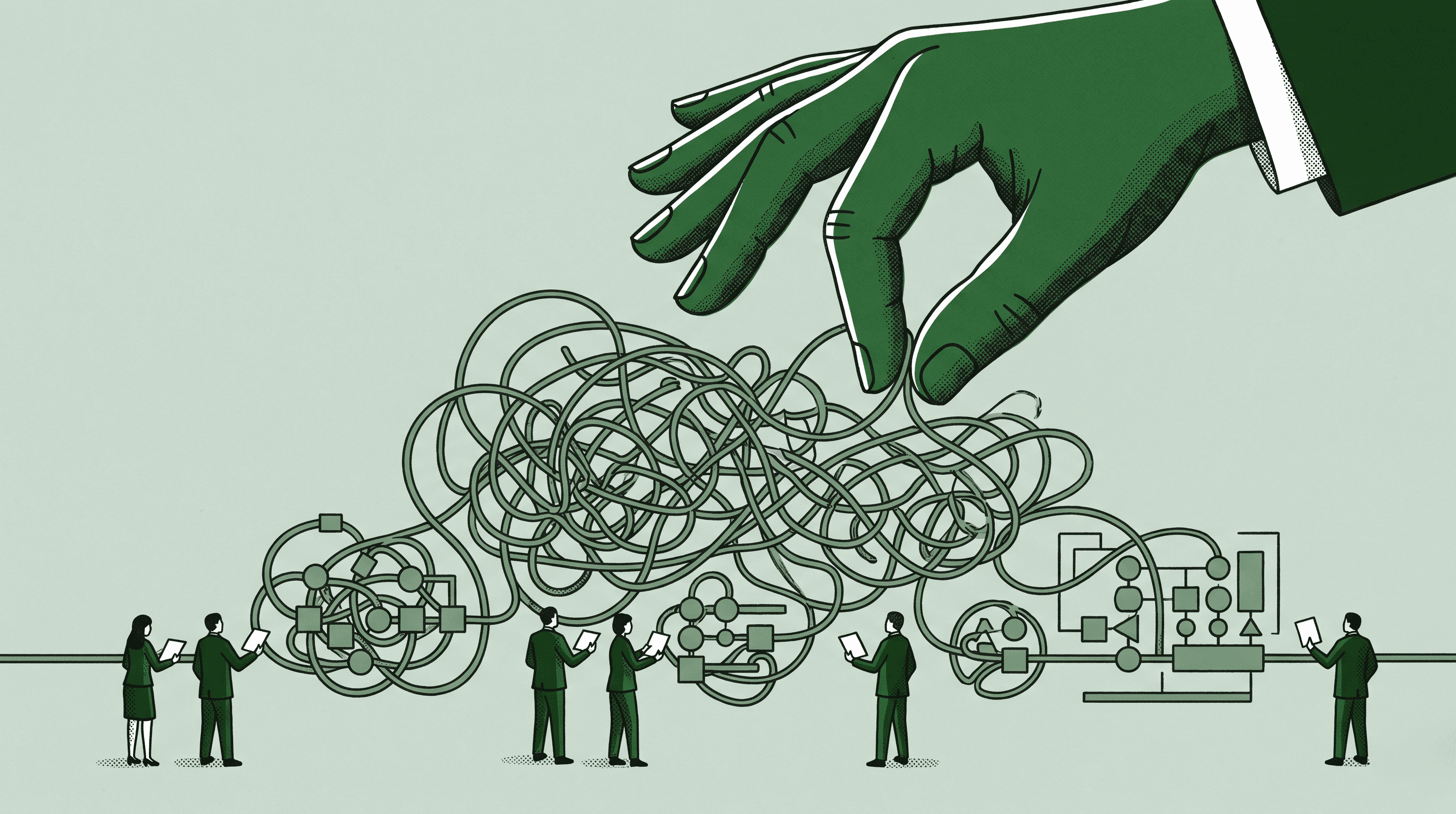
The latest model releases haven't changed a fundamental truth. Most enterprise tasks are still too complex for one-shot prompting and generalist agents.
Relying on a single, do-it-all AI to automate your workflows is asking for problems. Especially when you're trying to scale your use cases in production.
If you've ever watched a generalist LLM fumble through a multi-step process, you know the pain. It loses context halfway through. It makes assumptions that don't match your business rules. It produces inconsistent results that require more cleanup than the manual process did.
There's a better approach.
The Case for Specialization
The best operators I work with don't rely on a single AI to handle everything. They use a collection of specialized, multi-step agents, each designed to serve its own use case.
Each agent has specific context, specific skills, and specific artifacts that are highly relevant to the task at hand. A lead enrichment agent knows your ICP criteria, your CRM fields, and your data sources. A meeting summary agent knows your note format, your action item structure, and your team's project database.
Connecting these specialized agents is what I call a "chief of staff" agent. It helps you route the right task to the right AI for the job. Think of it like hiring a team of specialists instead of asking your CEO to run every single role in the company.
Why This Works Better
Specialized agents produce better results for three reasons.
Less context switching. Each agent stays focused on its domain. It doesn't need to juggle the context of your entire business to summarize a meeting or enrich a lead. Smaller scope means fewer errors and more consistent output.
Better tool usage. A specialized agent can be configured with exactly the tools and data sources it needs. No more guessing which tool to use or hallucinating capabilities it doesn't have.
Easier testing and improvement. When something goes wrong with a specialized agent, you know exactly where to look. When something goes wrong with a generalist agent handling 20 different tasks, debugging becomes a nightmare.
What This Looks Like in Practice
When done right, you can chain together multiple agents that each understand a core piece of your business logic. They automate the repetitive work and empower your team to build solutions in minutes instead of months.
A practical setup might include an agent for lead enrichment, one for meeting note processing, one for CRM pipeline hygiene, one for report generation, and one for customer onboarding document preparation.
Each agent has its own instructions, its own tools, and its own success criteria. The chief of staff layer routes incoming requests to the right agent based on the type of task.
This architecture is modular. You can improve one agent without touching the others. You can add new agents as your needs grow. You can retire agents when processes change.
The Path Forward
Businesses that have successfully implemented AI have moved beyond the one-size-fits-all approach. The best operators are orchestrating a network of their own specialized AI agents.
The technology is ready. The platforms exist. The question is whether you'll keep trying to make a single prompt do everything, or invest the time to build specialized agents that handle each workflow reliably.
Start with one process. Build one specialized agent. Prove the value. Then expand from there.